Sortime - Goods Puzzle Sorting
Tap Color StudioPuzzle
4.4802.00 Reviews
- Version
- 1.1.6
- Installs
- 1.00M
- Age Rating
- Everyone
Screenshots
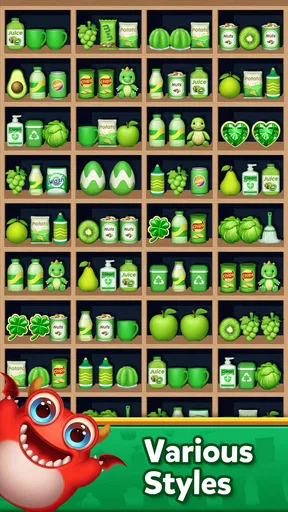
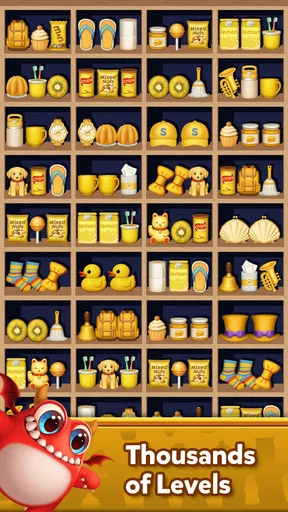
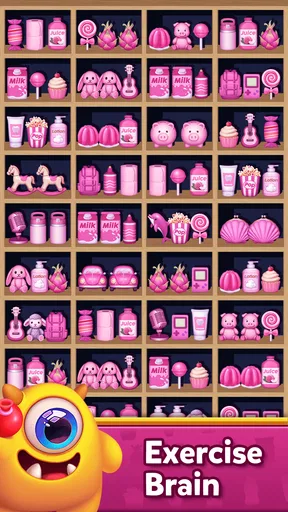
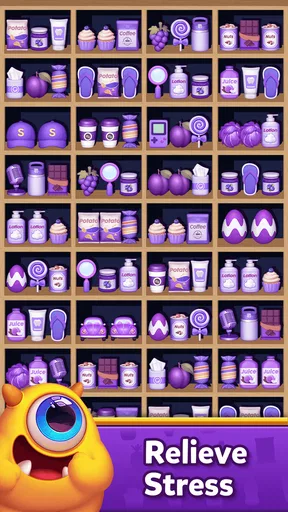
Our Review of Sortime - Goods Puzzle Sorting
 Analysis by Appyee
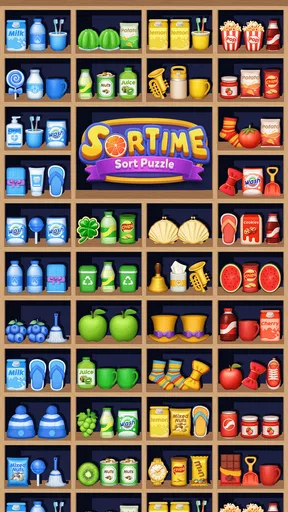
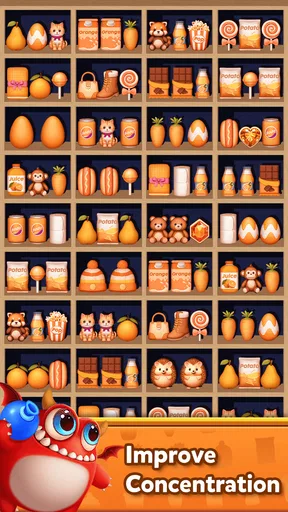
I spent time with Sortime - Goods Puzzle Sorting as a casual 3D puzzle game, and my first impression was that its appeal comes from a very simple promise: look at a crowded collection of goods, find the right matches, and sort them until the scene becomes manageable. That sounds straightforward, but the experience depends heavily on how easily you can read the objects, control the board, and keep track of several visual details at once.
Developed by Tap Color Studio, the game is free to download and sits in the puzzle category. It is aimed at Everyone, so it is clearly designed as a broadly approachable title rather than a game built for a narrow age group. The store summary describes a 3D goods-sorting challenge, and that is the right way to understand the core loop: this is less about reflexes or story and more about recognition, organization, and careful decisions.
What makes it worth considering is the low commitment. I can pick it up for a short break without learning a complicated ruleset first. What keeps it from being an automatic recommendation for everyone is the same visual focus that makes it interesting. If small objects, busy scenes, or repeated matching tasks are tiring for you, the game may become work rather than relaxation.
How the board reads and how the game guides you
I focus this section on how the three-dimensional board changes the simple act of finding matches: depth and overlap make scanning part of the puzzle, not just a prelude to tapping. I also look at a practical way to search methodically, which can reduce needless backtracking when several goods compete for attention.
A familiar sorting idea with a three-dimensional twist
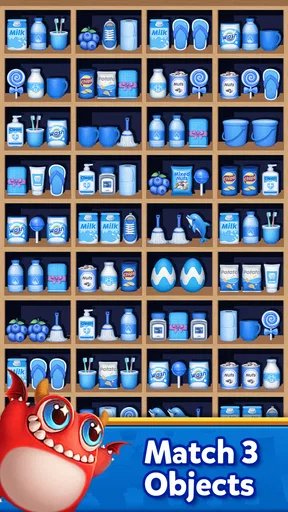
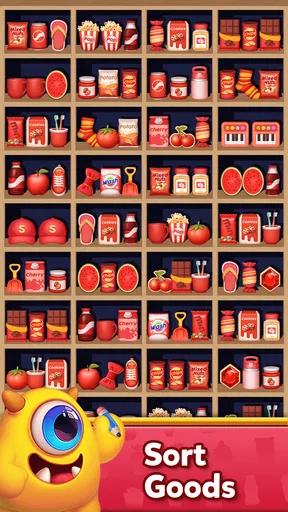
The basic task is easy to understand: identify goods that belong together and arrange them correctly. The three-dimensional presentation gives the puzzle more depth than a flat matching grid because objects can overlap, sit at different angles, or compete for attention in the same space. I found that the challenge is not simply spotting a pair. It is also deciding what to examine first and avoiding a move that leaves the remaining board harder to interpret.
That makes the game more thoughtful than a purely automatic matching exercise. A quick glance may reveal several possible matches, but the best choice is often the one that clears visual clutter or exposes another useful object. I recommend treating each move as a small cleanup decision rather than tapping the first familiar item you notice. That habit makes the board feel less random and gives the sorting process a satisfying rhythm.
The interface benefits from using a recognizable puzzle structure. I did not need a long explanation to understand the objective, which matters when a game is meant for short sessions. Someone can open it during a quiet moment, see the goods, and begin experimenting. That simplicity also helps younger players and people who do not usually play complex mobile games.
Readability depends on the scene, not just the rules
Although the rules are approachable, the visual information can become dense. Three-dimensional goods may differ by shape, color, orientation, or small decorative details, and those differences are not equally easy for every player to notice. In a calm, uncluttered arrangement, I could scan the board comfortably. When several similar objects appeared close together, I had to slow down and inspect them instead of relying on a quick color match.
This is an important distinction for anyone considering the game for a child, an older relative, or a player who prefers strong visual separation. The sorting idea is accessible at the conceptual level, but the board can still ask for careful visual comparison. I would not assume that an Everyone rating means every scene will be equally comfortable for every pair of eyes.
My practical advice is to play with the device held at a comfortable distance and avoid treating the game as something to rush through. If you are playing on a small phone, a tablet may provide a more relaxed view simply because the goods have more room to occupy the screen. That is a situational advantage rather than a special feature I would promise for every device, but it can make a noticeable difference during crowded puzzles.
Navigation is simple, but attention still matters
The game’s strongest navigational quality is that the main activity is obvious. You are not moving through a large story map or learning several unrelated systems. The sorting board remains the center of attention, which reduces the mental cost of getting started. For me, that made it suitable for short sessions when I wanted a puzzle rather than a long-form game.
The trade-off is that a simple interface places more responsibility on the board itself. When the screen contains many goods, the player must remember what has already been checked and what remains relevant. I found it useful to scan in a consistent direction instead of jumping randomly around the scene. For example, I would inspect the front area first, then work toward partially hidden items. This reduces repeated checking and is especially helpful when concentration is limited.
That scanning method is one of the more useful ways to approach the game. It does not change the rules, but it changes how much effort each puzzle demands. Players who tap impulsively may create confusion for themselves, while players who establish a visual route can make the same board feel more orderly. In a sorting game, the way you look is almost as important as what you select.
What the visual design asks from different players
For players who enjoy visual search, the 3D presentation is the main attraction. I liked the small moment of recognition when a matching group became clear after I had first viewed the board as a mess. The game rewards patience and observation rather than fast reactions, which makes it a better fit for people who enjoy untangling a scene at their own pace.
For players with color-vision differences, the experience may depend on whether shape and object identity remain clear enough without relying on color alone. I would approach it cautiously if color is your main difficulty, because sorting games often use visual distinctions as part of their challenge. The safer approach is to try a few boards and judge whether the goods can be separated by form and appearance rather than hue alone.
Players who are sensitive to visual busyness may also have mixed results. The three-dimensional layout creates interest, but it can make the board feel crowded. I found that taking a pause before the next move helped more than trying to maintain a fast pace. This is not a game I would recommend as background entertainment while watching something else. It needs enough attention to compare objects accurately.
Playing across abilities, places, and everyday routines
Here I consider when Sortime fits into an ordinary day and how screen size, steady hands, and visual comfort can shape the experience. I’ll also weigh its slower, scene-reading style against flatter or faster puzzle alternatives, so you can judge whether this kind of focused sorting suits your routine.
Why it works well for short, low-pressure sessions
One of the clearest strengths is how naturally the game fits into small gaps in the day. I can imagine playing it while waiting for an appointment, during a commute when it is safe to use a phone, or at home after finishing a task. The objective is focused enough that I do not need to remember a complicated story or rebuild a character setup before enjoying a session.
That makes it a reasonable choice for someone who wants a gentle mental activity rather than a competitive challenge. The sorting process can occupy the mind without demanding the rapid reactions found in action games. It may also suit families looking for a simple puzzle to try together, although the smallest details on a phone screen could make shared viewing less comfortable than individual play.
A realistic example would be a short evening break after work. I would open the game intending to play for a few minutes, inspect the board slowly, and use the first part of the puzzle to settle into the visual pattern. If the scene became too busy, I would stop rather than force a mistake. That is where the game works best for me: as an optional, contained activity, not as something that needs to dominate the evening.
Motor demands are modest, but precision still has a role
This is not a reflex-heavy puzzle in the usual sense. The main demand is choosing the correct item, not performing a complicated sequence of swipes or rapid taps. That makes it potentially more comfortable for players who prefer slower interaction. Still, selecting small goods on a crowded 3D board can require accurate touch input, particularly when several objects are close together.
If you have limited fine-motor control, the key question is whether the game gives enough room for confident selection on your device. A larger screen may help because the targets are easier to distinguish physically, while a smaller phone can make neighboring objects feel cramped. I would also avoid playing while walking or in a moving vehicle, since both visual scanning and precise tapping become harder when the screen is not stable.
The game is therefore more forgiving than an action title but not completely free of motor demands. A player may understand the correct match and still find the interaction frustrating if the target is small or partly obscured. That distinction matters when recommending it to someone who wants a puzzle specifically because they cannot comfortably manage fast games.
Sound, focus, and sensory comfort
The central experience is visual, so the game can make sense to someone who prefers not to depend on spoken instructions. That is useful in quiet environments and for players who would rather process information through the board itself. At the same time, a visually busy puzzle can be tiring even when it is not loud or fast.
I found that the best setting was one where I could give the board my full attention for a short period. Bright surroundings, glare, or a very small display would make the comparison task less comfortable. Players who are sensitive to motion or layered visual elements should test the experience in a calm setting before deciding whether it feels relaxing.
It is also worth separating concentration from difficulty. A board may not be logically complicated, but it can still be demanding if the player must repeatedly distinguish similar goods. That is why I would describe this as a visually attentive puzzle rather than a completely passive time-killer. If you want something you can play with minimal focus, a simpler flat matching game may be a better alternative.
Where it compares favorably with familiar puzzle alternatives
Compared with a standard tile-matching game, this title gives more importance to spatial arrangement and object recognition. A flat grid usually makes the available pieces easy to scan, while a 3D goods board asks you to interpret depth and clutter. That added layer can feel more rewarding if you like the sensation of organizing a messy space.
Compared with hidden-object games, the goal here is more structured. You are not simply searching for unrelated items based on a long list. The sorting objective gives each discovery a practical purpose, so the board becomes clearer as you progress. On the other hand, players who enjoy story, exploration, or elaborate scenes may find this narrower focus repetitive.
Compared with fast match-three games, the pace is more deliberate. I prefer that when I want to think without racing against a timer or reacting to falling pieces. Someone who enjoys constant movement and quick combos may find the sorting process too quiet. The better choice depends on whether you want visual organization or rapid pattern bursts.
Progress, spending, and choosing the right expectations
The game is free to download, which makes it easy to try without paying at the beginning. It includes optional in-app purchases ranging from $0.99 to $99.99 per item. I would keep that in mind before handing the game to a child or treating it as a completely cost-free activity. The download price and the possible purchase structure are not the same thing.
Because of that, I recommend deciding in advance whether you are comfortable with optional spending. If you are reviewing a game for family use, device-level purchase controls are sensible even when the core download costs nothing. I would also avoid judging the game solely by the presence of purchases; the more important question is whether the free experience gives you enough enjoyment before you consider anything extra.
The current version is 1.1.6, and the game requires Android 6.0 or later. That requirement covers a broad range of Android devices, but compatibility on paper does not guarantee the same visual comfort everywhere. Older or smaller screens may make the 3D goods harder to inspect, so device age and display size matter as much as the operating system requirement.
Who should try it and who should look elsewhere
I would recommend it to players who enjoy sorting, visual search, and gradual cleanup. It is especially appealing if you want a puzzle that can be understood quickly but still rewards a careful strategy. The game also suits people who prefer a slower alternative to reflex-based mobile entertainment and do not mind giving the screen their attention.
I would be more hesitant to recommend it to anyone who needs large, highly separated visual targets, finds crowded scenes tiring, or wants a puzzle that can be played almost entirely by instinct. Players who rely strongly on color distinctions should test whether the object shapes and details are sufficient for comfortable play. Those looking for a story-driven adventure, a competitive leaderboard experience, or a deep strategic system should also choose another category.
Its popularity suggests that the format has found a substantial audience: the game has an average rating of 4.4 from around 47 thousand ratings and more than a million installs. I see those figures as evidence that the basic concept is easy to pick up, not as proof that every player will find the visual demands comfortable. A popular puzzle can still be the wrong fit for a particular screen, attention style, or motor preference.
My inclusive verdict after using it
Sortime - Goods Puzzle Sorting is a pleasant choice when you want to turn a cluttered 3D scene into something orderly. I like that its main idea is immediately understandable and that it favors observation over speed. Tap Color Studio has built a game that can fit naturally into short breaks, especially for players who enjoy comparing objects and making one careful decision at a time.
Its inclusive appeal has limits, though. The same three-dimensional clutter that gives the puzzle character can challenge players with visual fatigue, color-related difficulties, or limited precision on small screens. I would start with short sessions, use the largest comfortable display available, and pay attention to whether shape and object details remain clear without rushing.
The Everyone rating and free entry point make it easy to explore, while the optional purchase range means families should still think about spending controls. For me, the best reason to try it is not the promise of endless distraction but the specific satisfaction of turning visual disorder into a clean solution. If that kind of focused sorting sounds enjoyable, this is a worthwhile download. If you need maximum readability, minimal visual clutter, or a puzzle that works comfortably with very little concentration, a flatter and simpler alternative may serve you better.
Verdict
Strengths of Sortime - Goods Puzzle Sorting
- Relaxing sorting gameplay that is easy to understand from the first level.
- Short levels make it convenient for quick breaks or casual play.
- Colorful item designs give the board a pleasant, approachable look.
- Gradual challenges help introduce new sorting patterns without overwhelming players.
- Simple touch controls feel natural on both phones and tablets.
Limitations of Sortime - Goods Puzzle Sorting
- Later puzzles can feel repetitive if you prefer fast-paced or varied gameplay.
- Some levels may rely more on trial and error than strategic planning.
- Progression can become slower when harder stages require repeated attempts.
- The small playing area may feel crowded on phones with compact screens.
- Players seeking deep story or competitive multiplayer features may find it limited.
Other Releases by Tap Color Studio
View All
Tap Color Pro: Color By Number
Board4.5

Tap Color® Color by number
Board4.7

Color Oasis - Color by Number
Board4.8
Similar Picks in This Category
View All
Block Blast!
HungryStudio4.8

Braindom: Brain Games Test
Lahana Game Studio4.6

AMAZE!
CrazyLabs LTD4.6

Sudoku - Classic Sudoku Puzzle
Oakever Games4.7

Art Puzzle - Puzzle Games
Easybrain4.8

Amaze GO!
Oakever Games4.9
Frequently Asked Questions
What is Sortime - Goods Puzzle Sorting, and how is it played?
Sortime - Goods Puzzle Sorting is a casual organization puzzle game focused on arranging products into the correct groups. You typically move, stack, or match similar goods while managing limited spaces and planning several steps ahead. The early levels are simple and help explain the mechanics, but later stages become more challenging as the board fills up and mistakes can restrict your available moves.
Is Sortime - Goods Puzzle Sorting free to download and play?
The game can generally be downloaded and played without an upfront purchase, making it easy to try on a compatible Android or iOS device. However, free puzzle games commonly include advertising, optional purchases, or both. These may provide hints, extra moves, boosters, or an ad-free experience. Before downloading, check the store listing for the current pricing, in-app purchase details, and any regional differences.
Does Sortime require an internet connection?
Sortime may allow you to complete at least some puzzles without a constant internet connection, which is useful when traveling or playing with limited data. Nevertheless, certain features can depend on connectivity, including advertisements, rewards, cloud synchronization, events, updates, or purchases. If offline play is important to you, test the game after temporarily disabling your connection rather than assuming every feature will work offline.
Are there hints, boosters, or ways to recover from a wrong move?
Puzzle levels can become difficult when similar goods occupy awkward positions or when the available spaces are limited. Sortime may provide hints, undo options, extra slots, or other assistance, depending on the level and current version. These tools can help recover from an inefficient move, but they may be limited or connected to advertisements and in-game resources, so careful planning remains important.
Is Sortime suitable for children and casual players?
Sortime is designed around straightforward sorting and matching ideas, so it can be approachable for casual players who enjoy short, relaxing puzzle sessions. Difficulty usually increases gradually, requiring more attention and forward planning. Parents should still review the age rating, advertising, privacy information, and in-app purchase settings before allowing children to play, since store policies and game content can change with updates.
Play our best games!


